New Year’s Resolution Time: Get Your Home Organized With the Help of a Storage Unit
A practical, step by step guide to decluttering, organizing, and resetting your home for the year ahead

The start of a new year brings a familiar mix of motivation and frustration. Motivation to improve daily life. Frustration when the house still feels cluttered, crowded, and harder to manage than it should. For many households, getting organized is one of the most common New Year’s resolutions, yet it is also one of the hardest to maintain.
Organization is not just about aesthetics. A cluttered home costs time, increases stress, and makes even simple tasks harder. Closets overflow, garages stop functioning as garages, spare rooms become storage rooms, and basements turn into long term holding areas for things you are not ready to deal with.
A storage unit can be a powerful tool in solving this problem, not as a place to forget items, but as a strategic extension of your home. Used correctly, self storage helps you reclaim space, simplify decision making, and build systems that last beyond January.
This guide walks through how to use a storage unit as part of a realistic, sustainable home organization plan. It covers what to store, how to store it, how to avoid common mistakes, and how to keep your home organized all year long.
Why getting organized is such a common New Year’s resolution
The new year creates a natural reset point. Calendars turn over, routines shift, and people look for tangible improvements they can make quickly. Organization fits perfectly into that mindset.
Common reasons people set organization goals include:
- Feeling overwhelmed by clutter in daily life
- Hosting stress when guests come over
- Losing time searching for items
- Difficulty cleaning or maintaining spaces
- Life changes such as new kids, downsizing, or working from home
The problem is not motivation. The problem is space and systems. Most homes simply are not designed to comfortably store everything a modern household owns.
This is where a storage unit becomes less of a last resort and more of a planning tool.
How a storage unit actually helps you get organized
A storage unit works best when it supports organization rather than replaces it. The goal is not to move clutter out of sight permanently. The goal is to create breathing room so you can organize intentionally.
Key benefits include:
- Creating temporary space while decluttering
- Separating everyday items from seasonal or occasional items
- Allowing rooms to return to their intended use
- Reducing decision fatigue during major cleanouts
- Protecting items you want to keep but do not need daily
When used this way, storage becomes a productivity tool rather than a dumping ground.
Step one: declutter first, store second
Before renting a storage unit, start with a structured decluttering process. Storage is most effective after decisions are made, not before.
Sort your belongings into four categories. Work room by room and sort items into:
- Keep and use regularly
- Keep but use seasonally or rarely
- Donate or sell
- Discard
Be honest about what actually belongs in your daily living space. Items in the second category are prime candidates for a storage unit.
If you are working on specific areas like a garage, review the detailed guidance in Decluttering a Garage? Here’s When to Use a Storage Unit to learn when renting a storage unit makes sense during a cleanout, and apply the same principles to closets, spare rooms, and basements.
Step two: decide what belongs in a storage unit
Not everything should go into storage. The most effective storage units hold items that are valuable, infrequently used, or space intensive.
Common items that make sense to store:
- Holiday decorations
- Seasonal clothing and footwear
- Sports equipment
- Camping and outdoor gear
- Extra furniture
- Home improvement materials
- Business inventory or records
- Family keepsakes and memorabilia
Before packing, review What NOT to Store in a Self Storage Unit for a clear list of prohibited and high risk items that should never be placed in a storage unit.
Step three: choose the right size storage unit
Choosing the wrong size unit is one of the most common mistakes. Too small leads to over stacking and frustration. Too large wastes money.
A quick rule of thumb:
- 5x5 or 5x10 for boxes, seasonal items, and small furniture
- 10x10 for one to two rooms of furniture
- 10x15 or larger for whole household transitions or business use
For a more precise breakdown, see How to Choose the Right Size Storage Unit to understand storage unit dimensions and common use cases, then use the interactive Size Guide to match your inventory to the right unit size.
Step four: pack efficiently to stay organized
Packing determines whether your storage unit helps or hurts your organization goals.
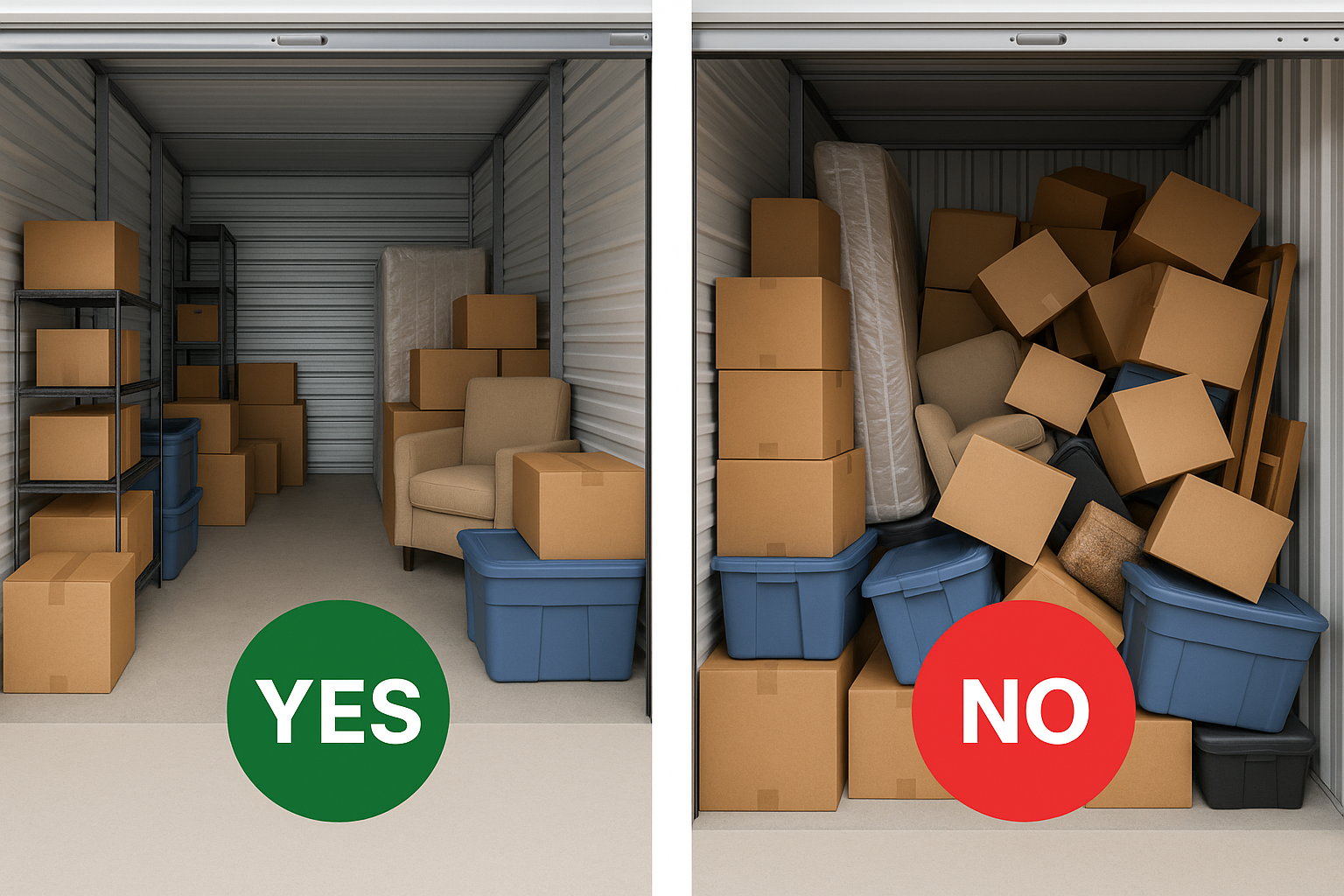
Best practices for efficient storage packing:
- Use uniform box sizes when possible
- Label all boxes on multiple sides
- Group similar items together
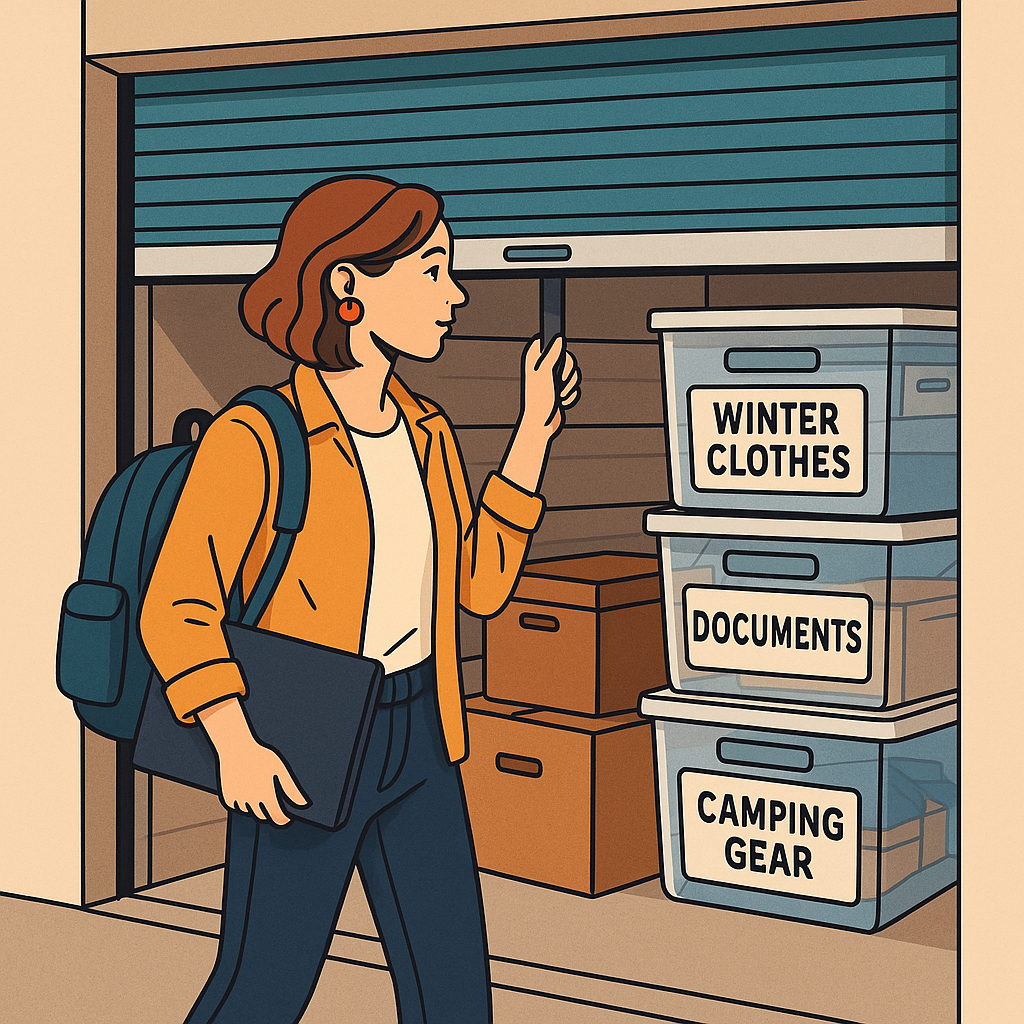
- Store frequently accessed items near the front
- Use shelving inside the unit for visibility
- Keep an aisle for access
Efficient packing saves time and money. For deeper strategies, reference How to Save Money With Efficient Storage Packing to learn proven packing methods that reduce wasted space and unnecessary unit upgrades.
Step five: protect what you store
Items placed in storage should be treated with the same care as items in your home.
Protection essentials:
- Use quality boxes and packing materials
- Elevate items off the floor
- Cover furniture with breathable covers
- Avoid plastic wrap that traps moisture
- Consider a Tenant Protection Plan for added peace of mind
Tenant Protection Plans help safeguard your belongings against unexpected events and are a smart addition for long term storage.
Using storage to reset specific areas of your home
Closets
Move off season clothing, shoes, and accessories into storage. Keep only what fits the current season and lifestyle in your closet. This improves visibility and reduces daily friction.
Garage
A garage should store vehicles and essential tools, not become a long term storage room. Move recreational gear, décor, and bulk items into a unit to restore functionality.
Spare rooms and offices
Storage units help convert catch all rooms back into guest rooms, nurseries, or home offices by removing overflow items.
Living spaces
Removing excess furniture, décor, and rarely used items makes living spaces easier to clean and more enjoyable.
Making organization last beyond January
The biggest risk with storage is forgetting what you stored or continuing to add without intention.
Build a sustainable system:
- Keep a digital inventory of stored items
- Review your unit contents quarterly
- Rotate seasonal items in and out
- Avoid storing things you would not buy again
Storage should support your life, not become a parallel version of clutter.
How storage supports major life transitions
Storage units are especially helpful during:
- Moving or downsizing
- Renovations or remodels
- New family additions
- Business growth
- Estate cleanouts
In these situations, storage provides flexibility and breathing room while decisions are made thoughtfully.
Why location and access matter
Convenience plays a major role in whether storage actually gets used correctly.
Look for:
- Easy drive up access
- Secure, gated facilities
- Flexible unit sizes
- Clear rental terms
Use the Locations page to find a nearby facility that fits your needs and makes regular access practical.
When to talk to a storage expert
If you are unsure about unit size, protection options, or layout, contact a storage professional. A short conversation can prevent months of frustration.
Visit the Contact page to get personalized guidance based on your specific situation.
Q&A: organizing your home with a storage unit
Is using a storage unit just avoiding decluttering?
No, when used correctly. Storage works best after decluttering decisions are made. It supports organization rather than replacing it.
How long should I keep items in storage?
There is no universal timeline. Seasonal items may rotate yearly. Other items may stay longer. Review contents periodically to avoid forgotten clutter.
Is a storage unit worth the cost?
For many households, the cost is offset by reclaimed living space, reduced stress, and avoided upgrades or moves to larger homes.
Do I need climate control?
Climate control is recommended for sensitive items like electronics, documents, artwork, and certain furniture. Review your inventory carefully.
How do I avoid overfilling my unit?
Choose the right size, pack vertically with shelving, and keep an access aisle. Use the Size Guide before renting.
Can storage help with business organization too?
Yes. Storage units are commonly used for inventory, tools, records, and equipment, especially for small and growing businesses.
Start the year organized and stay that way
A storage unit is not about storing more. It is about living better with what you choose to keep. When used intentionally, self storage helps turn a New Year’s resolution into a long term improvement.
Explore unit options, review the Size Guide, learn about Tenant Protection Plans, browse Locations, or reach out through the Contact page to take the next step toward a more organized home.